IICRC Certified  ·  No Subcontracting  ·  Works With All Insurance  ·  60-Minute Response

Mold Removal & Remediation in NYC & the Tri-State Area

Certified Identification. Containment. Complete Removal. Clearance Testing.

Mold in a New York property is not a cosmetic problem — it is a structural risk, a health hazard, and a potential insurance recovery. Surface treatment is not remediation. Repainting over mold is not remediation. FIRST Emergency Restoration provides the full professional cycle: moisture source identification, New York State-compliant containment, removal of all contaminated materials, structural drying to verified safe levels, and independent clearance testing before the job is certified complete.

IICRC

Certified

BBB

Certified

Licensed &

Insured

Works With

All Insurance

24/7 Emergency

Response

Safety

Guaranteed

Mold Removal & Remediation — New York City & Tri-State Area

New York’s housing stock, climate, and recurring water damage events create a mold growth environment that is among the most challenging in the country. NYC’s pre-war building inventory — plaster and masonry construction common throughout Manhattan, Brooklyn, and the Bronx — absorbs and retains moisture for extended periods after any water event, creating ideal mold growth conditions in wall cavities and structural assemblies. Long Island’s high water table and frequent basement flooding generate recurring mold risk in the region’s vast inventory of postwar homes with finished basements. The Hudson Valley’s historic housing stock and humid mountain climate combines pre-war porous construction with above-average ambient moisture.

Mold cannot be permanently remediated with surface treatment. Painting over visible mold, applying bleach to mold on porous surfaces, or cleaning mold without addressing the moisture source that caused it are all temporary measures that produce recurrence. Professional mold remediation identifies the specific moisture source that enabled mold growth, establishes containment to prevent spore spread during removal, removes all contaminated materials in compliance with New York State regulations, dries all remaining structural materials to verified safe levels, and provides post-remediation clearance testing by an independent assessor.

New York State has specific regulatory requirements for mold assessment and remediation — including licensing requirements for both assessors and remediators, mandatory written remediation plans for qualifying projects, and post-remediation clearance standards. FIRST Emergency Restoration operates in full compliance with all applicable New York State mold remediation regulations, coordinating with licensed assessors where required and providing the clearance documentation your insurance carrier and future property transactions may require.

Mold Problem in NYC Emergency?

What Our Mold Remediation Service Covers

FIRST Emergency Restoration provides full-cycle mold remediation — from initial inspection and moisture source identification through clearance testing and structural restoration.

Mold Inspection & Full-Property Assessment

Thorough inspection of all suspected and potentially affected areas — including areas not visually accessible where moisture history suggests concealed mold growth. Thermal imaging and professional moisture meters identify hidden moisture in wall cavities and structural assemblies where mold develops before it becomes visible.

Moisture Source Identification & Correction

Mold cannot be permanently remediated without identifying and eliminating its moisture source. We locate the specific water source — active leak, residual moisture from a past event, or chronic condensation — and address it as a required component of the remediation scope, not an optional add-on.

Negative Air Pressure Containment

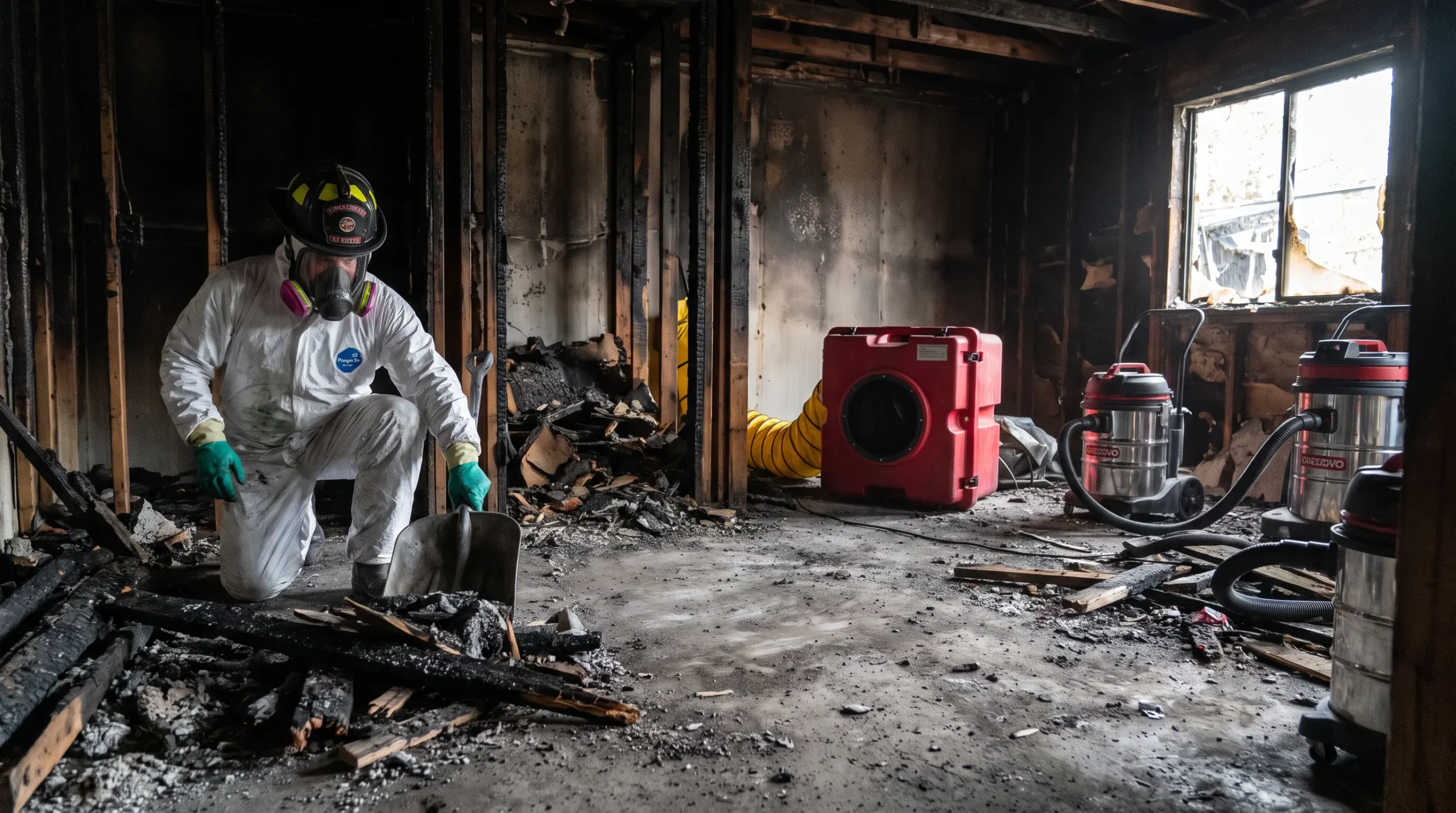
Before any mold is disturbed, negative air pressure containment is established using polyethylene barriers isolating all affected areas from clean areas. HEPA air filtration maintains negative pressure throughout work areas, preventing spore migration to unaffected spaces during the removal process.

Mold Removal & Material Disposal

All mold-contaminated porous materials — drywall, insulation, framing, flooring — are removed and disposed of in compliance with New York State mold remediation regulations. Non-porous surfaces that can be successfully decontaminated are treated with EPA-approved biocide solutions rather than removed.

HEPA Vacuuming & Continuous Air Scrubbing

All surfaces within the remediation area are HEPA vacuumed after material removal. Industrial HEPA air scrubbers run continuously throughout the containment area and adjacent spaces — capturing airborne mold spores during and after removal, until spore counts meet acceptable levels before containment is released.

Structural Drying to Verified Safe Levels

All remaining structural materials in the remediated area are dried to verified safe moisture levels using commercial drying equipment before reconstruction begins. Mold cannot be permanently remediated without eliminating the residual moisture that allowed it to grow in the first place.

Post-Remediation Clearance Testing

After remediation is complete, we coordinate independent post-remediation air quality and surface testing by a licensed New York State mold assessor. Clearance testing provides third-party verification that remediation was successful — required for insurance claims and increasingly expected in New York property transactions.

Reconstruction & Insurance Documentation

All removed materials replaced and space restored to pre-loss condition. For mold resulting from a covered water event, we provide a complete documentation package for your insurance claim — moisture source assessment, mold extent, remediation scope, and clearance test results.

Mold in the New York Metro — Why This Region Has Elevated Risk

The New York metropolitan area has structural conditions that make mold growth more prevalent than in most markets. NYC’s pre-war housing — the plaster and masonry construction dominant in Manhattan, Brooklyn, and the Bronx — absorbs and retains moisture for extended periods after water events. A pipe leak inside a plaster wall that goes undetected for two weeks creates mold conditions that an equivalent drywall wall would not, because plaster’s porosity and moisture retention characteristics are fundamentally different. NYC’s humid summer climate — with sustained high humidity from June through September — accelerates mold development in any untreated moisture condition.

Long Island presents its own elevated mold risk profile. Nassau County’s high water table and frequent sump pump failures flood basements across the county every storm season. When these events are not followed by professional structural drying, residual moisture in concrete slabs, wood subfloor systems, and finished basement wall assemblies feeds mold development over the weeks following the event. Many Nassau and Suffolk County homeowners who experienced basement flooding have hidden mold in their finished basement walls that has never been professionally assessed.

New York State’s mold remediation regulations add another dimension specific to this market. Article 32 of the New York State Labor Law requires licensed mold assessors and remediators for qualifying projects, with separate entities performing assessment and remediation. The assessor must produce a written remediation plan before work begins and conduct a post-remediation assessment after completion. FIRST Emergency Restoration coordinates with licensed New York State mold assessors on all qualifying projects and delivers the post-remediation clearance documentation that New York regulations require.

Our Mold Remediation Process — Step by Step

Professional mold remediation follows a specific, non-negotiable sequence — each step builds on the previous one, and skipping any step produces incomplete remediation that recurs.

# 1
Inspection, Moisture Assessment & Scope Definition

Thorough inspection of all potentially affected areas using thermal imaging and moisture meters — identifying all visible and concealed mold growth, mapping moisture spread in structural assemblies, and defining the complete remediation scope before any work begins.

# 2
Moisture Source Identification & Testing Coordination

We identify the specific moisture source and develop a correction plan. For insurance claims or large-scale projects, we coordinate with licensed New York State mold assessors for professional air quality and surface testing — establishing the baseline for post-remediation clearance comparison.

# 3
Remediation Plan & Containment Setup

A written remediation plan is developed in accordance with applicable standards. Negative pressure containment is established in all affected areas before any mold-disturbing work begins — isolating contaminated spaces from clean areas with polyethylene barriers and HEPA air filtration.

# 4
Mold Removal & Material Disposal

All mold-contaminated porous materials are removed and disposed of in compliance with New York State regulations. Non-porous surfaces that can be successfully treated receive EPA-approved biocide application. No material is removed that does not require removal — we remediate where possible and remove where necessary.

# 5
HEPA Vacuuming & Air Scrubbing

All surfaces within the remediation area receive HEPA vacuuming after material removal. Industrial HEPA air scrubbers run continuously until spore counts in the remediated area reach acceptable levels. This step cannot be shortened — airborne spore reduction is essential for lasting remediation.

# 6
Moisture Source Correction & Structural Drying

The underlying moisture source is corrected — whether plumbing repair, drainage improvement, or structural drying with commercial equipment. All remaining structural materials are dried to verified safe moisture levels. Mold returns wherever moisture conditions that caused it are not fully corrected.

# 7
Reconstruction to Pre-Loss Condition

All removed materials are replaced and the space is fully restored. Reconstruction does not begin until structural drying is verified complete by moisture meter readings — not visual inspection.

# 8
Post-Remediation Clearance Testing & Certification

Independent clearance testing by a licensed New York State mold assessor verifies successful remediation. Clearance certification is provided to you and your insurance carrier. We do not declare remediation complete without third-party clearance.

What to Do If You Suspect Mold in Your New York Property

Mold requires different handling than other property damage — because disturbing mold growth without proper containment dramatically spreads spores to clean areas.

What To Do

What Not To Do

Why New York Property Owners Choose FIRST Emergency Restoration for Mold Remediation

Mold remediation in the New York market requires compliance with New York State regulations, deep familiarity with the region’s housing stock, and the full professional cycle from moisture source to clearance certification.

What We Deliver on Every Job

What Sets FIRST Apart on Mold Jobs

Common Causes of Mold in New York Properties

Mold in New York properties is almost always the downstream consequence of a moisture event that was not professionally addressed. These are the most common moisture sources driving mold growth across NYC and the Tri-State area.

  • Water damage from burst pipes, appliance overflows, or roof leaks that was not professionally dried — leaving residual moisture in wall systems and subfloor assemblies
  • Long Island basement flooding from sump pump failures or high water table events that was not followed by professional structural drying
  • HVAC condensate line failures or drain pan overflows — a common hidden moisture source in NYC apartment buildings and Tri-State suburban homes
  • Roof leaks in older Westchester, Long Island, and Hudson Valley homes with deferred maintenance histories
  • NYC bathroom tile and grout failures allowing moisture migration into wall assemblies over extended periods
  • Crawl space moisture accumulation in older homes — particularly in Hudson Valley and North Shore Long Island properties with older vapor barrier systems
  • Firefighting water that was not professionally extracted and dried after a fire event
  • Building envelope failures in NYC — window seal failures, parapet water intrusion, and facade penetrations allowing chronic moisture entry
  • Post-Sandy flood damage in Staten Island and Long Island South Shore communities where remediation was incomplete or deferred


The defining characteristic of mold problems in New York properties is that they are almost always preventable — if the original water event had been professionally dried. When professional drying does not occur, mold development is not a question of if, but of when. The longer a moisture condition persists unaddressed, the more extensive and costly the eventual mold remediation becomes.

Our Service Area — NYC & the Tri-State Region

FIRST Emergency Restoration provides mold removal & remediation services across New York City and the greater Tri-State Area:

Manhattan

Brooklyn

Queens

The Bronx

Staten Island

Long Island

Nassau County

Suffolk County

Westchester County

Hudson Valley

Bergen County, NJ

Fairfield County, CT

We also serve all communities throughout New Jersey, Connecticut, and Pennsylvania.

Frequently Asked Questions

Answers to the questions New York property owners most frequently ask about mold removal and remediation.

Q: What is the difference between mold removal and mold remediation?

A: Mold removal refers to physically removing visible mold from surfaces. Mold remediation is a broader professional process that includes: identifying the moisture source and correcting it, establishing containment to prevent spore spread during removal, removing all contaminated materials in compliance with New York State regulations, drying all structural materials to safe levels, and conducting post-remediation clearance testing. Mold removal without the full remediation process — and critically, without moisture source correction — produces temporary results. The mold returns because the conditions that caused it were not addressed.

A: Yes — New York State enacted the Mold Damage Prevention and Remediation Law (Article 32 of the Labor Law) and associated regulations. For projects above 10 square feet, licensed mold assessors and remediators are required — and they must be separate entities under New York law. The assessor must create a written remediation plan before work begins, and a post-remediation assessment must verify completion. FIRST Emergency Restoration operates in full compliance and coordinates with licensed New York State mold assessors on all qualifying projects.

A: It depends on the cause. Mold resulting from a sudden, accidental covered water event — a burst pipe, appliance failure, or storm damage — is typically covered under a standard New York homeowner’s policy as part of that water damage claim. Mold resulting from long-term moisture accumulation, maintenance deficiency, or flooding from external sources is generally not covered. Many NYC homeowners discover that mold in their finished basement — which developed after flooding from an overwhelmed city sewer system — is not covered because the original flooding event was also not covered. We assess the cause of mold growth during our inspection and document it accurately for your carrier.

A: Visible mold growth — black, green, or white fuzzy patches — is the obvious indicator. But mold in New York properties frequently grows in concealed locations: inside wall cavities, under flooring, in basement substructures, and within HVAC ductwork. Indicators of hidden mold include: a persistent musty odor that does not resolve with cleaning or ventilation, unexplained respiratory symptoms or allergic reactions in occupants, visible water staining or efflorescence on walls, soft or soft-feeling areas in finished surfaces, and any history of unresolved water damage. Call (000) 000-0000 for a professional moisture assessment if any of these signs are present.

A: A persistent musty odor after a flooding event is a strong indicator that structural materials were not fully dried professionally — and that mold has established itself in the wall systems, subfloor, or concrete structure. Call FIRST Emergency Restoration for a professional moisture assessment and inspection. We use thermal imaging and moisture meters to identify all areas of residual moisture and mold growth — including inside finished walls where mold is invisible — and develop a remediation plan that addresses both the mold and the moisture conditions that caused it. For Nassau and Suffolk County homeowners, mold after basement flooding is one of our most common engagement scenarios.

A: Timeline depends on the extent and location of mold growth. A small, contained mold condition in a bathroom or single wall section — typically under 10 square feet — can often be addressed in 1 to 2 days. Larger conditions affecting wall cavities, basement substructures, or multiple rooms require 3 to 7 days of active remediation, followed by drying time and the scheduling of post-remediation clearance testing by an independent assessor. In NYC multi-unit buildings where mold has spread through shared wall systems, building management coordination and multiple unit access adds to the total timeline.

A: Mold can return after remediation only if the moisture conditions that caused its original growth are not corrected. This is the most important reason we identify and address the moisture source as a required — not optional — component of every mold remediation engagement. When remediation is performed correctly — with moisture source correction, complete contaminated material removal, structural drying to verified safe moisture levels, and post-remediation clearance testing — mold recurrence should not occur. Remediation without moisture source correction always produces temporary results.

Related Services from FIRST Emergency Restoration

Property damage rarely happens in isolation. FIRST Emergency Restoration provides the complete scope of restoration and environmental services:

Fire Damage Restoration

Our flagship service — the most complex, highest-stakes restoration work we do.

Water Damage Restoration

24/7 emergency extraction, structural drying, and complete water damage restoration.

Storm Damage Restoration

Emergency securing, flood cleanup, and structural restoration for all NYC metro storm events.

Smoke Damage Restoration

Molecular-level odor elimination, soot removal, and air quality certification.

Mold in Your New York Property? Get a Professional Assessment Now.

IICRC Certified  •  BBB Certified  •  Licensed & Insured  •  Works With All Insurance  •  No Subcontracting  •  Safety Guaranteed

Don’t wait — mold spreads and health risks increase with time. FIRST Emergency Restoration provides certified mold inspection, remediation, and clearance across NYC, Long Island, Westchester, and the Tri-State Area.

Available 24/7, 365 days a year.